To most people, the F-word is one of the crudest and most despicable words you can say. I say it all the time; I'm no stranger to dropping the F-bomb.
But this F-word, although as horrific, is not the F-word you may be thinking of. This F-word is Famine. Famine is a widespread scarcity of food usually accompanied or followed by regional malnutrition and starvation. It is a scary epidemic most people don't think about on a daily basis.
During mealtime in the Kelly household, if we didn't finish the food on our plates we were lectured. Mom would tell us to clean our plates because there are starving children in Africa. At a young age, I wasn't sure exactly what that had to do with me finishing the disgusting brussel sprouts on my plate. It's not like I could have packed up all my leftover food into a box and sent it to Africa. Trust me; I had asked, but Mom told me that although the gesture was thoughtful, the food would spoil before it even got there.
As a young kid, I knew there were starving children all over the world, but I didn't know there were also starving children in America. Probably in my own hometown! We could have easily been those children. My family wasn't rich and there were many times we struggled with money and my parents worried about putting food on the table for us four kids. They never wanted their kids to go hungry, so it didn't matter if bills were paid or there was gas in the car; we ALWAYS had food and we never went to bed hungry. Which is why my parents stressed that we clean our plates. Instead of arguing or refusing to clean my plate, I went along with it because I couldn't imagine what it felt like to go hungry.
But it always seemed to me that the starving children in Africa were more important. Probably because they were far away; out of sight, out of mind. And I had seen more "sponsor a child in Africa" commercials than I had seen the affects of hunger in our own country on our own children. Was it possible there were starving children in America too, the richest country in the world? And if there were, how horrible was the famine in other countries? There was no way I could comprehend the damaging affects of famine, but it was time I tried.
Now as an adult, I fully realize famine is a horrible epidemic affecting thousands upon thousands of people all over the world. Because of this knowledge, I have a sense of guilt if I throw away food. Who am I to throw away food when someone somewhere else needs that food? I feel guilt in other ways as well, like going to restaurants and seeing how wasteful patrons can be, throwing out perfectly good food. Although I do not enjoy leftovers, I do try to eat them. But I'll admit that although I feel guilt about wasting food, I am just as guilty of wasting food as everyone else. It's something I'm conscious of and although I try not to waste any food, it's not always possible.
What I didn't know was that with a little bit of effort on each person's part, we can put an end to this cycle of hunger. Yes, Mom was correct; there are starving children in Africa. There are also starving children in America too. It may seem overwhelming, but you can take action. Find your local food pantry to help hungry people in America; donate money to Feed the Future to help hungry people all over the world. Sign a petition to end hunger at ONE. If you don't do anything else, follow my mom's advice and clean your plates so you don't waste food.
There are many ways you can help end this cycle; you just have to care enough to find a way. Spread the F-word among your friends, family, coworkers. Knowledge is power; the more people who know, the better.
Showing posts with label Blog Action Day. Show all posts
Showing posts with label Blog Action Day. Show all posts
16 October 2011

15 October 2009
Earth Has A Fever; Humans Have The Cure
The planet Earth is amazing and there will never be anything like her again. She gives us food, water, heat, beauty, and life. She takes care of us, from birth to death, each and every generation. Unfortunately, she has a sickness; BUT, we have the anecdote. We need to cure her before it's too late. We need to return the favor and give her life.

I decided to participate in Blog Action Day, which, according to the website, is "an annual event that unites the world's bloggers in posting about the same issue on the same day on their own blogs with the aim of sparking discussion around an issue of global importance. Blog Action Day 2009 will be the largest-ever social event on the web. One day. One issue. Thousands of voices".
This year's topic: Climate Change. If you are a blogger, please post your own blog about climate change. If you are just a reader, please forward this blog to as many people as you can to raise awareness about this topic. It doesn't matter what day, what month, or what year it is; anytime is a good time for awareness and change.
Although my voice may be quiet when it stands alone, when united with thousands of other voices, it is BOOMING!
Once upon a time, all climate changes occurred naturally; that is, until the Industrial Revolution. During the Industrial Revolution, people started using machines to make their lives easier in both agricultural and industrial practices. This revolution completely changed the way humans lived their lives, and with that, it also changed the climate.
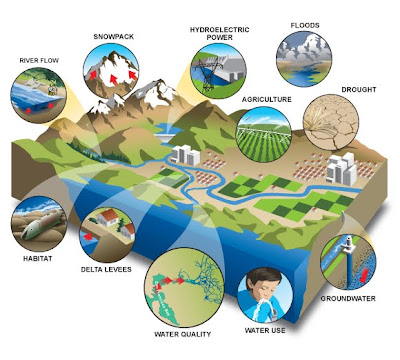
What exactly is climate change? First, it's important to know what a climate is--a long-term average of a region's weather, which includes temperature, precipitation, humidity, wind, etc. Climate change simply represents changes in these long-term averages and weather patterns. With climate change, weather patterns for specific regions can get warmer or cooler, raineer or drier, etc. Although climate change still occurs naturally, humans have affected climate change the most.
Along with climate change is the idea of global warming. Many people joke about global warming; for example, someone in the Midwest will say "It's snowing in August! Global warming my @SS!!!" Global warming refers to an average increase in the Earth's temperature, which can cause changes in climates around the world. Earth's temperature has raised about 1° F over the past 100 years.

This 1° F seems pretty insignificant, but that 1° F has changed everything. It has contributed to changes in rainfall patterns, a rise in sea level, and has had a wide range of impacts on plants, wildlife, and even humans. So when people joke about global warming, they're taking the term warming a little too literally at times; yes, the planet is technically getting warmer, regions such as the Midwest may experience cooler weather at times when the climate's average is warmer weather.
What causes global warming? The same thing as what causes climate change--natural events and humans. What most people don't realize is exactly how they control climate change and global warming. Sure, population growth, deforestation, and burning of fossil fuels are all human activities and they all affect climate change by affecting the mixture of gases in the atmosphere. The energy it takes to light and heat and the electricity it takes to power are homes are major influences on the climate as well, not to mention the power plants, transportation, air pollution, and other ways we use fuel. But, it's the smaller things we do that also make the difference in changing our climate.
Your favorite TV show is on, you're going on a hot date and your hair needs a blow dry, your house is hot so you turn on the A/C, you just bought a new album and can't wait to listen to it, or you reheat leftovers in the microwave--every time you engage in these seemingly minor activities, you are helping send greenhouse gases into the air! In order to perform these functions, we rely on electricity, which comes from power plants and since most power plants use coal and/or oil to make electricity, burning coal/oil produces greenhouse gases!
Not only is our climate affected, but humans and ecological systems are affected as well. Climate change can affect the health of humans both directly and indirectly. For example, extremely hot temperatures and high humidity cause heat related health problems. On the same note, ecological disturbances, pollution, flooding, and changes in food and water supplies also impact human health.

The world's habitats and ecosystems are very specific and rely on a certain climate to thrive and survive. These regions rely on a variety of things--rainfall, temperature, soil type, wind, etc. to survive and a change in climate can upset this balance and endanger these ecosystems. Since most climate changes have occurred slowly, many plants and animals have adapted to these changes, or they have simply moved elsewhere. But if the climate changes occur more rapidly like some scientists are predicting, the animals and plants in these ecosystems may not be able to react accordingly and they could become endangered.
The sea level is in danger of rising even more as well. As Earth's temperature rises, the glaciers start melting and they add more water to the ocean. Also, warmer temperatures make water expand, which makes the sea level rise. With the rising of the sea level comes coastal flooding, which can cause saltwater to flow into freshwater areas, thus harming plants and wildlife that depend on freshwater. Coastal flooding also affects beachfront properties, as well as beaches.
EVERYTHING and EVERYONE on planet Earth is affected by climate change, but EVERYONE can make a difference. Although there are huge, major natural events and human controlled reasons and events for climate change, there are also small ones; so, it makes sense that there are both major and minor things we as humans can do to curb global warming and change the climate for the better.
1. LEARN AND SHARE: In order to understand the environment, one must learn about it. There are many informative books at your library or bookstore, as well as websites and even classes you can attend to learn more about the environment. Once you have educated yourself, it's time to educate your family and friends. Not everyone is easygoing about change, but with a few helpful tips, facts, and if you lead by example, they'll be more likely to follow your lead! Check out the EPA's website about climate change and spread the wealth of your knowledge.

2. SAVE ELECTRICITY/SAVE ENERGY: Believe it or not, turning off lights, fans, TV's, stereos, and other electronics DOES conserve electricity and energy! Check out ways you and your family can help conserve electricity and energy. Contact your local electricity provider for helpful energy efficient tips. You can also visit Energy Star for information about energy efficient consumer products, as well as helpful tips and information.
3. PUBLIC TRANSPORTATION/BIKE/WALK: Driving a car is not a bad thing; you just have to be smart about it. If possible, get an electric car, investigate whether or not your car accepts Flex-Fuel, or buy a Hybrid of your favorite brand. For more information about energy efficient and environment friendly vehicles, visit Fuel Economy. If that's not possible, then ride the bus, your bike, or use your own two legs to transport you to work, the store, the mall, the park, or other places in town. You can also carpool or even share a taxi with someone. Not only are these options cheaper, but they are better for the environment as well.
4. PLANT TREES: Planting trees and other leafy plants are a great way to reduce greenhouse gases in the environment because trees can absorb carbon dioxide, a harmful greenhouse gas. Go to your local nursery or plant store to purchase a tree to plant in your yard, or get involved in a community tree planting. Trees are not only great for the environment and are aesthetically pleasing to the eye.

5. RECYCLE: A person's trash is another person's treasure. Recycle glass, plastic, paper, and anything else that can be cleaned and reused. Purchase cloth bags to use when you go shopping instead of plastic; if you do use plastic bags at the store, take them home and recycle them by using them for something else. Reuse folders in your office or at home. When people recycle, we send less trash to the landfill and help save on natural resources such as trees, metals, and oil. Learn more about recycling and how to apply it to your life.
6. CONVENIENCE OR ENVIRONMENT: This day in age, it seems every product gets more and more packaged up! Food stores sell 12-packs of individual plastic water bottles, 6-pack cookies/crackers/chips, and individual applesauce, jellos, puddings, etc. Electronic stores wrap products multiple times in plastic, pack it in Styrofoam, then in multiple boxes before you can take it home. Yes, individual servings are more convenient, but they are a million times worse for the environment. Invest in a Nalgene bottle instead of buying and wasting plastic water bottles. Invest in Tupperware to put chips, applesauce, pudding, veggies and other food items instead of wasting plastic and paper on individual packs or sandwich bags.
Obviously, this blog does not cover ALL the issues about climate change and global warming, or ALL the ways each person on this planet can help fix the problem, but it's a start.

Whatever you do, do NOT ignore this problem. We helped cause climate change and global warming; now, it's up to us to fix it! We hold Earth's future in the palm of our hands, and it's time for a change. Mother Earth is waiting for us to heal her.

This year's topic: Climate Change. If you are a blogger, please post your own blog about climate change. If you are just a reader, please forward this blog to as many people as you can to raise awareness about this topic. It doesn't matter what day, what month, or what year it is; anytime is a good time for awareness and change.
Although my voice may be quiet when it stands alone, when united with thousands of other voices, it is BOOMING!
Once upon a time, all climate changes occurred naturally; that is, until the Industrial Revolution. During the Industrial Revolution, people started using machines to make their lives easier in both agricultural and industrial practices. This revolution completely changed the way humans lived their lives, and with that, it also changed the climate.

Along with climate change is the idea of global warming. Many people joke about global warming; for example, someone in the Midwest will say "It's snowing in August! Global warming my @SS!!!" Global warming refers to an average increase in the Earth's temperature, which can cause changes in climates around the world. Earth's temperature has raised about 1° F over the past 100 years.

What causes global warming? The same thing as what causes climate change--natural events and humans. What most people don't realize is exactly how they control climate change and global warming. Sure, population growth, deforestation, and burning of fossil fuels are all human activities and they all affect climate change by affecting the mixture of gases in the atmosphere. The energy it takes to light and heat and the electricity it takes to power are homes are major influences on the climate as well, not to mention the power plants, transportation, air pollution, and other ways we use fuel. But, it's the smaller things we do that also make the difference in changing our climate.
Your favorite TV show is on, you're going on a hot date and your hair needs a blow dry, your house is hot so you turn on the A/C, you just bought a new album and can't wait to listen to it, or you reheat leftovers in the microwave--every time you engage in these seemingly minor activities, you are helping send greenhouse gases into the air! In order to perform these functions, we rely on electricity, which comes from power plants and since most power plants use coal and/or oil to make electricity, burning coal/oil produces greenhouse gases!
Not only is our climate affected, but humans and ecological systems are affected as well. Climate change can affect the health of humans both directly and indirectly. For example, extremely hot temperatures and high humidity cause heat related health problems. On the same note, ecological disturbances, pollution, flooding, and changes in food and water supplies also impact human health.

The sea level is in danger of rising even more as well. As Earth's temperature rises, the glaciers start melting and they add more water to the ocean. Also, warmer temperatures make water expand, which makes the sea level rise. With the rising of the sea level comes coastal flooding, which can cause saltwater to flow into freshwater areas, thus harming plants and wildlife that depend on freshwater. Coastal flooding also affects beachfront properties, as well as beaches.
EVERYTHING and EVERYONE on planet Earth is affected by climate change, but EVERYONE can make a difference. Although there are huge, major natural events and human controlled reasons and events for climate change, there are also small ones; so, it makes sense that there are both major and minor things we as humans can do to curb global warming and change the climate for the better.
1. LEARN AND SHARE: In order to understand the environment, one must learn about it. There are many informative books at your library or bookstore, as well as websites and even classes you can attend to learn more about the environment. Once you have educated yourself, it's time to educate your family and friends. Not everyone is easygoing about change, but with a few helpful tips, facts, and if you lead by example, they'll be more likely to follow your lead! Check out the EPA's website about climate change and spread the wealth of your knowledge.

3. PUBLIC TRANSPORTATION/BIKE/WALK: Driving a car is not a bad thing; you just have to be smart about it. If possible, get an electric car, investigate whether or not your car accepts Flex-Fuel, or buy a Hybrid of your favorite brand. For more information about energy efficient and environment friendly vehicles, visit Fuel Economy. If that's not possible, then ride the bus, your bike, or use your own two legs to transport you to work, the store, the mall, the park, or other places in town. You can also carpool or even share a taxi with someone. Not only are these options cheaper, but they are better for the environment as well.
4. PLANT TREES: Planting trees and other leafy plants are a great way to reduce greenhouse gases in the environment because trees can absorb carbon dioxide, a harmful greenhouse gas. Go to your local nursery or plant store to purchase a tree to plant in your yard, or get involved in a community tree planting. Trees are not only great for the environment and are aesthetically pleasing to the eye.

6. CONVENIENCE OR ENVIRONMENT: This day in age, it seems every product gets more and more packaged up! Food stores sell 12-packs of individual plastic water bottles, 6-pack cookies/crackers/chips, and individual applesauce, jellos, puddings, etc. Electronic stores wrap products multiple times in plastic, pack it in Styrofoam, then in multiple boxes before you can take it home. Yes, individual servings are more convenient, but they are a million times worse for the environment. Invest in a Nalgene bottle instead of buying and wasting plastic water bottles. Invest in Tupperware to put chips, applesauce, pudding, veggies and other food items instead of wasting plastic and paper on individual packs or sandwich bags.
Obviously, this blog does not cover ALL the issues about climate change and global warming, or ALL the ways each person on this planet can help fix the problem, but it's a start.

12 October 2009

Subscribe to:
Posts (Atom)